 WCL Project Lifter
WCL Project Lifter
WCL Project LifterThere is so much crackpot material out there about lifters, and so little legitimate work, that it is really hard to tell how well lifter technology works, if at all. After a few beers one night Ross and I decided to build and fly a lifter rather then conjecture endlessly about how well they may or may not work. Well we actually decided to build some lifters, sober up, and then try to fly them the following day. Neither of us was going to touch high voltages after drinking. Lifters typically use several tens of kilovolts.
What follows is a write-up of what we built and how it worked. We just built them to blow off the accumulated steam of working some insane hours we had both been working. We do not purport to have any new or even useful data.
If you want to try building your own lifter there lots of web sites out there with beginner plans. One of the most common is a triangular wedge. Example plans can be found here and here. Be very respectful of the danger of the high voltages you are using if you do build a lifter. High voltages can easily kill you.
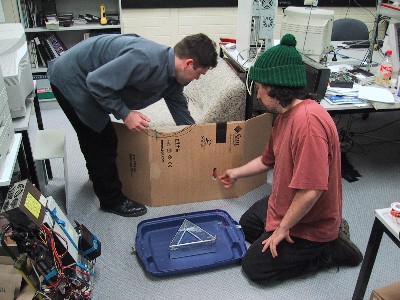
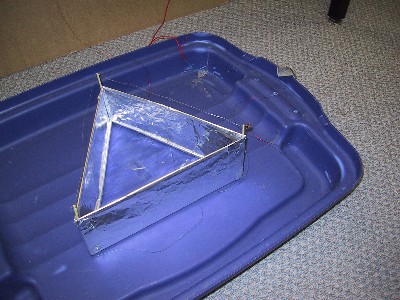
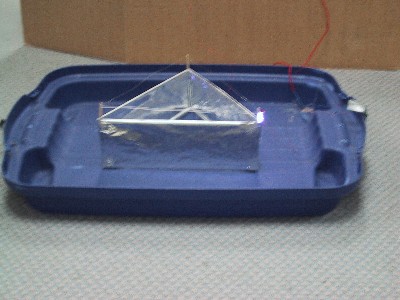
Both Ross and I had looked at some sample plans that were on the web and for our first Lifter we built a modified version of the wedge design. At the time we did not have any balsa wood. To replace the balsa wood struts we used rolled aluminium foil to form tubes to provide a frame for the foil skirt. The anode wire which sits above the skirt was raised on four shaved pieces of bamboo.
|
|
|
On our first power up we discovered that the carpet had a fine metal mesh to bind the base of the fibbers together. So in other words we were sitting on a giant ground plane. After a brief pause the air between the anode and the carpet was sufficiently ionized to hold a continuous spark across the several centimetres of distance. After that we started putting the lifters on a large piece of plastic. This increased the dielectric enough to mostly stop the shorting. I say mostly as we still occasionally had problems. We always were several meters from the lifter when power was applied and we had two different kill switches, one on the power supply and a person at the wall ready to unplug the supply.
|
|
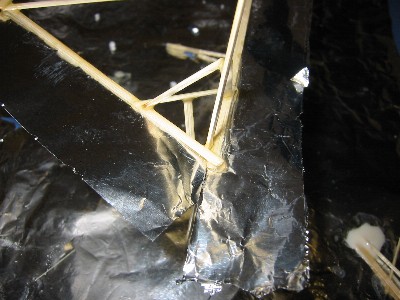
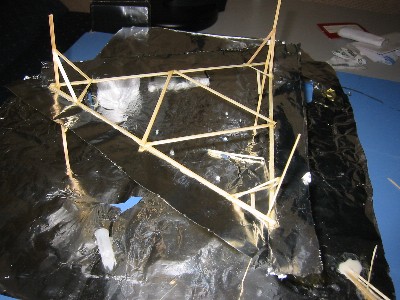
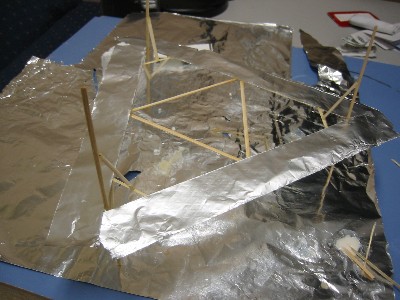
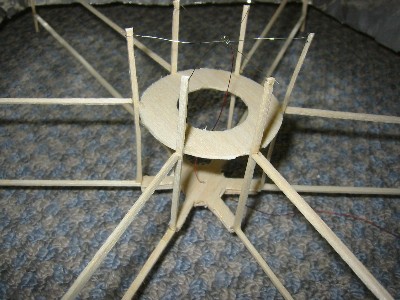
Lacking Balsa and wanting something stronger then the aluminium tube frames I used shaved bamboo to construct a frame. I typically keep a pack of bamboo skewers about the lab for projects. You can get about a hundred of them at the grocery store for a dollar and they have all sorts of uses. For this frame I split the bamboo with a razor blade and then shaved the pieces with the same blade down to thin flat strips. The bamboo strips formed a triangular frame, itself composed of four component triangles. The corners were reinforced with struts and then an aluminium skirt was glued into place. |
|

|
The finished design turned out to very strong but much too heavy. As I found out later the difference in weight between bamboo and balsa is enormous. |
|
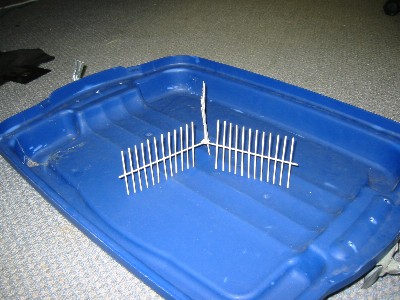
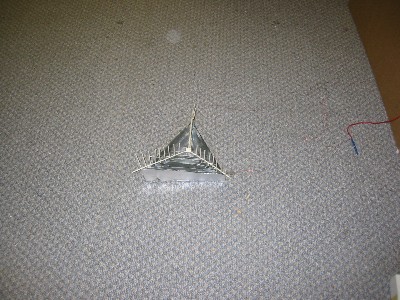
Since surface area seemed proportional to thrust Ross tried building a coiled design to hopefully maximize skirt surface area. Basically a continuous strip of foil gets wrapped about the frame. The fact that it is a single strip of foil drops the overall resistance of the skirt while the coil design maximized the surface area of the skirt. In the end it was packed too tightly and the coil shorted together. With a few iterations of this design I think you could lock onto one that generated quite a bit of thrust. Possibly by using a dielectric material spaced equally distant from the metal coils layers. You would still generate ion wind but would help prevent the plates shorting together with sparks. |
|
We have a video of our setting the carpet on fire with this design! Oops! Sorry Ross but your lifter was the only one I still hade video of this happening with. To be fair to Ross though, we set the carpet on fire a couple of times and not just with his design. |

|
|
|

|
|
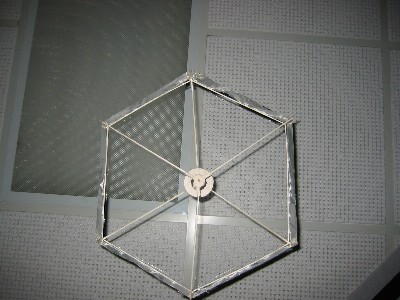
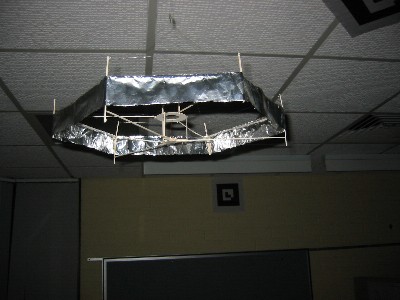
A six sided redundant design I was able to chop out every other support strut once it was finished and still have a strong airframe. |
|
In the end we got lifters to hop and pivot on turns. Nothing I would consider even tethered flight. We were able to generate wind that we could feel and demonstrate thrust. The lack of tethered flight was very frustrating as it seemed like we were very close. I believe our problem was in our power supply. We were tapping the power from a new model monitor that was not rated to deliver the currents we wanted. Under load I think the monitor's voltage dropped and caused the problems. For now though the project is done. We had a lot of fun and blew off a lot of steam. We also got a better intuition for filtering out the crackpot from the interesting when reading about Lifters. This project only got allotted a weekend. It is time to get back to grad school.
I still don't chalk this project up as successful as ultimately we had no flight and I think that ultimately that was possible given more time. One of these days if I run across a high voltage supply I will likely dust this project off and fly a lifter.