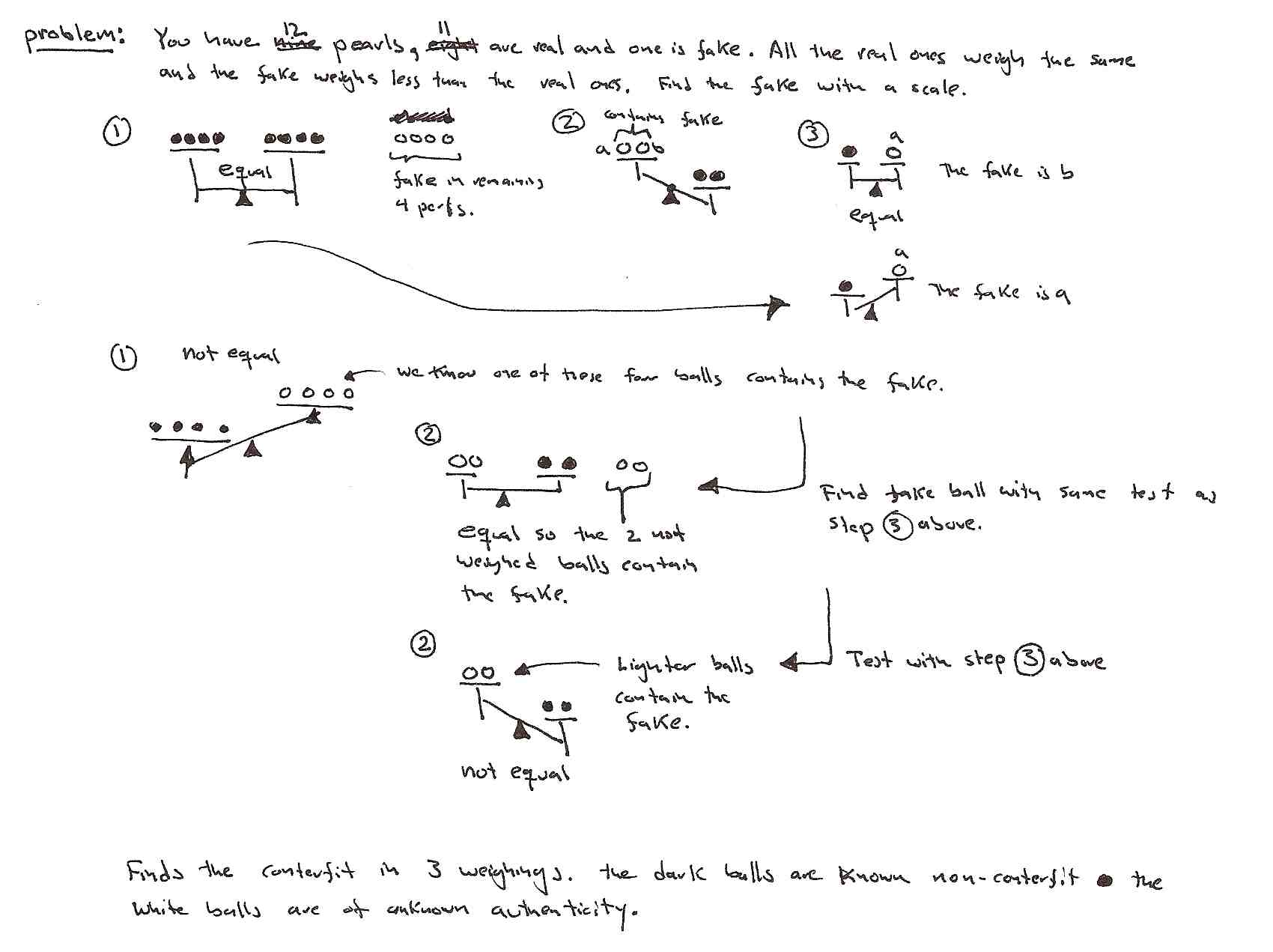
This version of the problem is fairly straight-forward because you know the counterfeit is lighter. This means that we can weigh any eight items and know which of 4-items contains the counterfeit. If the scale is equal the non-weighed items contain the fake, otherwise the lighter side of the scale contains the fake. A 12-item example is shown in the illustration left.
The second use of the scales should be to weigh more of the candidate items against more of the known good items. If the scale is equal you have candidates for the fakes, if not the lighter side of the scale gives you two candidate fakes.
If you started with 12 items to test the first test should weight 8 items as two groups of four items, and the second weighing should weigh 4 items as two groups of two items.
When a final weighing is needed, like with a 12 item version, the final weighing tests one of the two remaining candidates randomly against a known good ball. If equal you know the other ball is the fake, if unequal you know the lighter ball is the fake.
The solution to the 8 or 9 item version is identical to the 12 item versions, but only two weighings are needed. If you started with a 9 item problem the first test would weigh 6 items as two groups of three items, and the second would weigh 2 of the remaining 3 items individually for the solution. You can use the same solution for the 8 item example.